Officers Injured
36
Treated for physical injury in Mogadishu hospitals in the last 2 months; 0% had formal psychological pathways.
Brief figure · reporting dates not supplied
TRD · Occupational wellbeing
A Somali-led occupational wellbeing initiative in partnership with Madina Hospital
Program brief: partnership and implementation status awaiting confirmation.
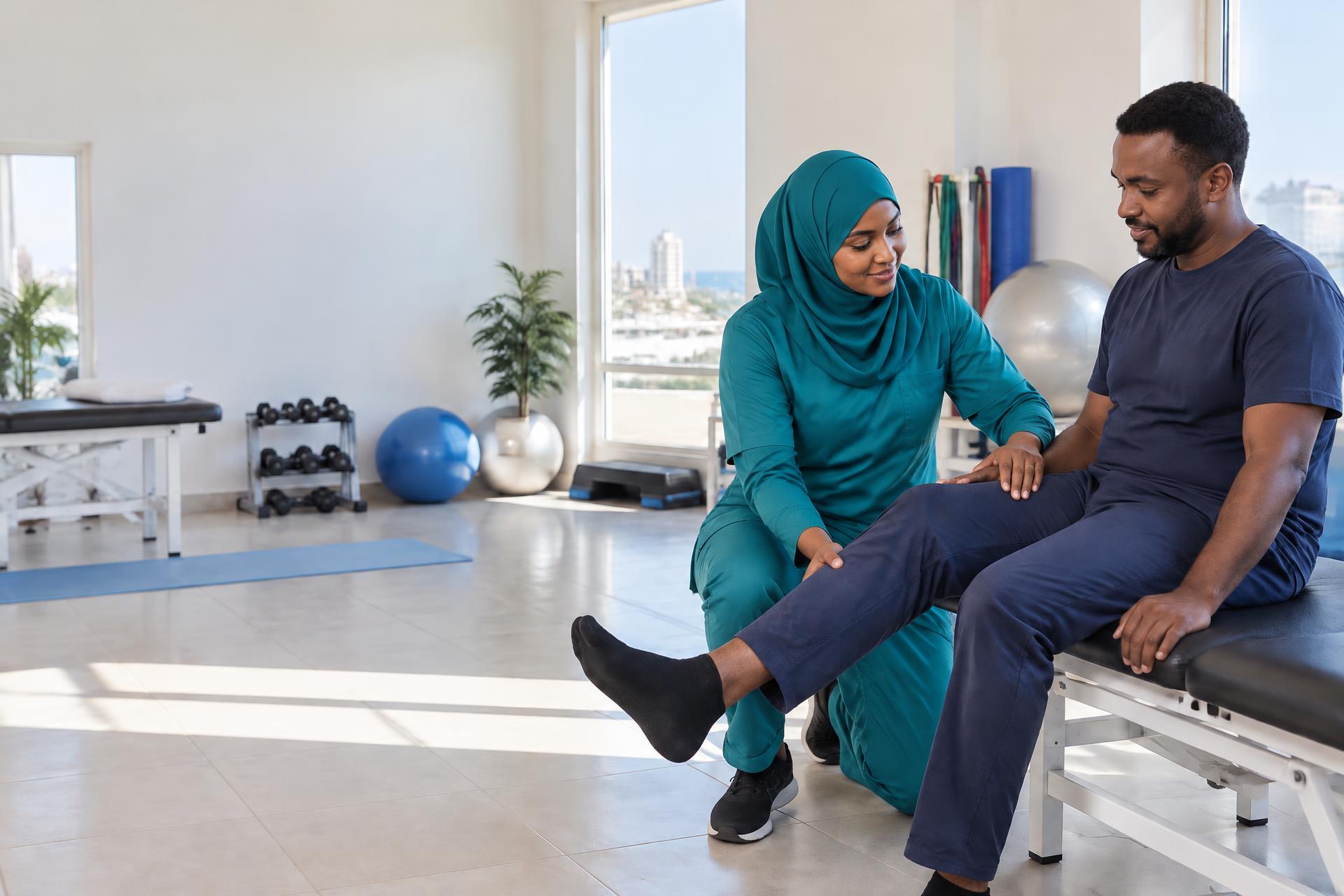
Explore the programIllustrative clinical image; not actual program participants.
Operational governance
Program brief: “Delivered under Towfiiq Relief & Development (TRD) governance and WHO-approved clinical standards.” Clinical approval has not been independently verified; no WHO endorsement is implied.
Program dashboard
Figures below are supplied program context and targets, not verified live impact results. Population PTSD estimates must not be interpreted as an officer-specific diagnosis or baseline.
36
Treated for physical injury in Mogadishu hospitals in the last 2 months; 0% had formal psychological pathways.
Brief figure · reporting dates not supplied
3 to 5
Initial Madina Hospital pilot cohort operating out of existing physiotherapy clinic space.
Proposed pilot cohort · not enrollment data
30% – 32%
Nationwide study shows 30% probable PTSD in Somalia (32% among Mogadishu IDPs).
Brief-cited population estimates · citation pending
100%
Somali/Arabic-speaking staff with clinical supervision and WHO-approved guidelines.
Program supervision target · approval unverified
Regional evidence context
Percentage estimates · reference graphic, not comparable clinical prevalence measures
Somalia population benchmark · 30%
Supplied brief · probable PTSD · citation pending
Mogadishu IDP population · 32%
Supplied brief · probable PTSD · citation pending
Uganda patrol officers (sub-threshold) · ≈62%
Approximately 62% read from reference graphic · study unverified
South Africa unrest officers (high range) · ≈40%
Approximately 40% read from reference graphic · study unverified
Values reproduce the supplied brief and design reference. Uganda’s sub-threshold symptoms and South Africa’s high-range estimate are not equivalent to probable PTSD in Somalia’s civilian populations. Study citations, methods and dates are required before clinical interpretation; none of these values is a verified Somali police baseline.
Occupational wellbeing brings public safety and human dignity into the same conversation. The initiative brief identifies areas that need careful clinical assessment, not assumptions about individual officers.
An officer recovering from an injury deserves more than a healed wound: dignified support, a trusted place to seek help and a pathway toward wellbeing, family life and community connection.
Why action is needed now
The initiative brief identifies checkpoint shootings, active-duty substance misuse and unaddressed physical and psychological needs as areas of concern. These are program concerns, not verified incident findings or judgments about all officers.
H.O.P.E. proposes a dignified, confidential bridge between rehabilitation and occupational wellbeing, starting small within existing clinical space rather than creating a parallel service.
Connect physical rehabilitation with access to psychological support.
Use a proposed 3–5 officer cohort to assess feasibility before wider delivery.
Prioritize Somali/Arabic-speaking staff, consent and supervised care.
H.O.P.E. · Towfiiq Relief & Development
Program partnerships and evidence enquiries